
In my house, sugar was the sixth food group.
Dinner didn’t end until dessert appeared: ice cream, a square of Cadbury, maybe a piece of pera (South Asian sweet). Even today, when I visit my parents, my mom will hand me a bowl of Häagen-Dazs Belgian Chocolate ice cream at 10 p.m. like it’s medicine.
And if I say it’s too late.
She pouts. She tells me it’s “just a little.”
Or she says, “You’ll be hungry later.”
So I eat it. Not because I’m hungry. Not because I want it.
But because I’ve been conditioned to believe sugar = love = safety.
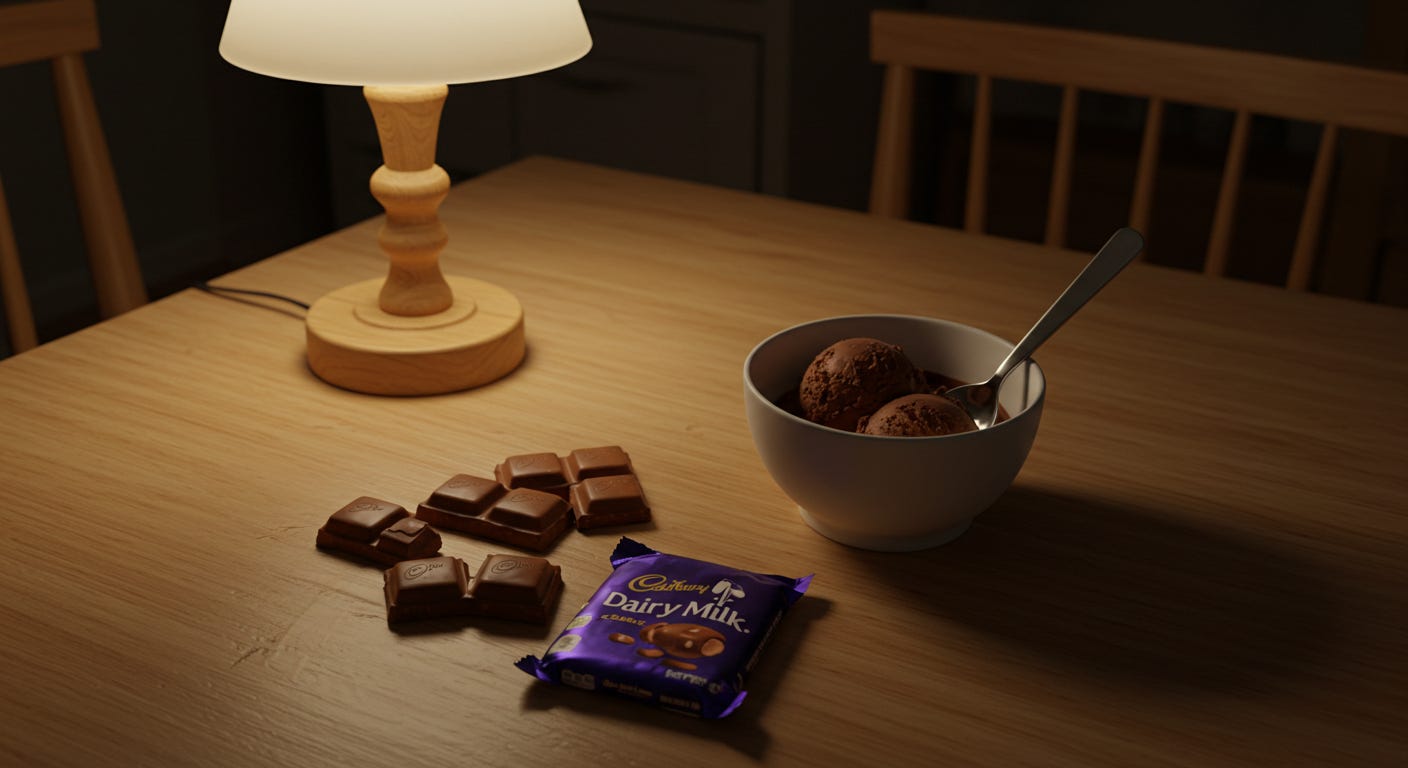
The Belief
For years, I thought my sugar cravings were about discipline.
That I needed to be “stronger.”
That I was weak, addicted, dramatic.
But cravings aren’t just in your head.
They’re in your blood, your hormones, your stress levels, and your culture.
The Science of Cravings (Simple, True, and No BS)
1. Blood Sugar Spikes and Crashes
When you eat a carb-heavy meal (like rice, roti, or dessert), your blood sugar rises. Your body releases insulin to bring it back down.
But if your blood sugar drops too quickly, your brain panics. It craves fast sugar to “fix” the dip, often in the form of chocolate or sweets.
2. Stress and Cortisol
When you’re stressed, your body produces cortisol. This hormone pushes you to seek quick energy: hello, sugar.
It’s not a weakness. It’s survival biology.
3. Cultural Conditioning
If you grew up being rewarded with dessert or pressured to eat sweets at family gatherings, your brain hardwires sugar as comfort.
Even if you’re not hungry, you crave it because your body associates sugar with belonging, care, and love.
Science check: Studies show stress hormones (like cortisol) increase cravings for high-sugar foods (Harvard Health). And reactive blood sugar crashes can trigger sugar cravings even when you’ve eaten enough (Mayo Clinic).
What I Wish I Knew Earlier
Cravings aren’t evidence of failure.
Skipping meals or eating “light” all day often leads to stronger nighttime cravings.
You don’t have to cut sugar forever to feel better; you just need balance and awareness.
You can build systems that work with your biology, not against it.
Why I’m Writing This
I’m still unlearning the idea that I have to earn dessert or feel guilty if I say no.
If you’ve ever eaten chocolate in secret, skipped dinner to “be good,” or stared at a Cadbury bar like it was the enemy…I see you.
Your cravings aren’t moral failures.
They’re chemical reactions.
And they can be managed with compassion, not shame.